[2025-10-18] Broadcasting Ministry and the Role of Media in the Church
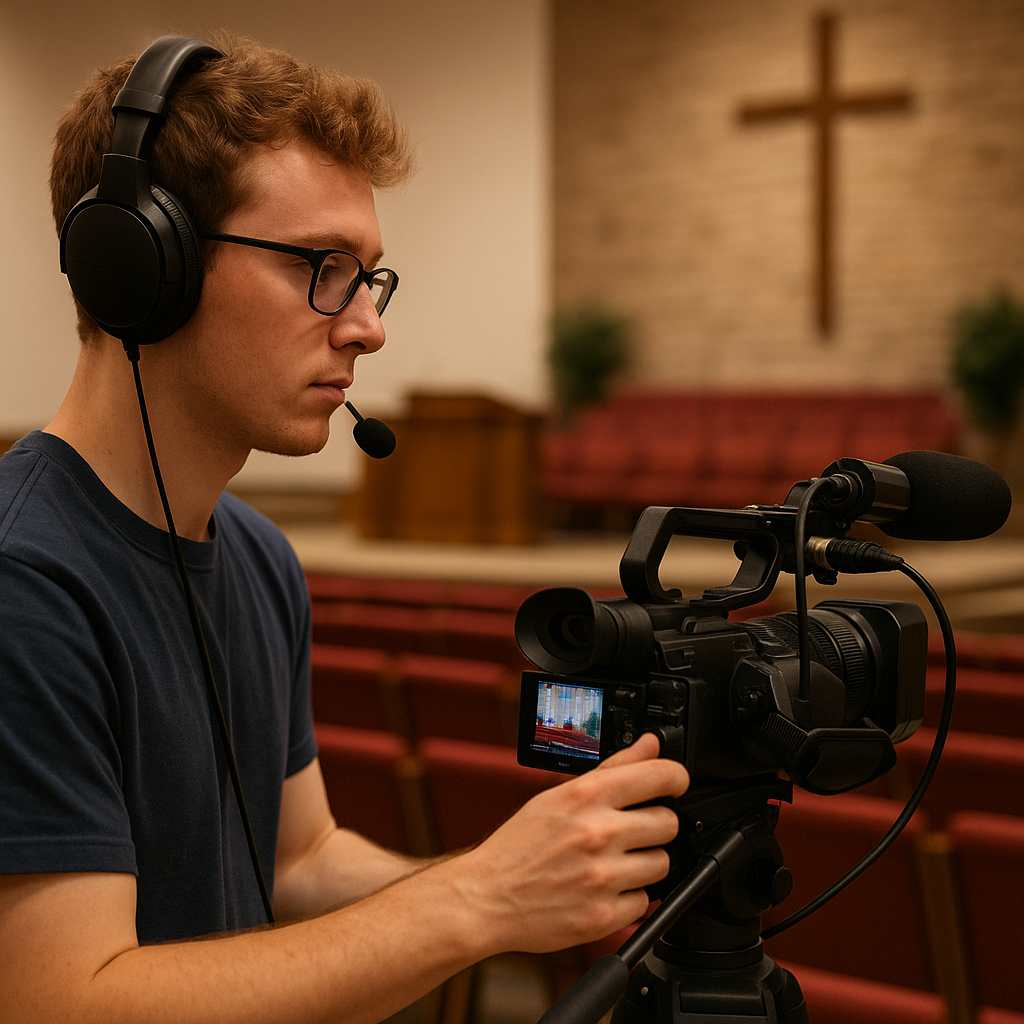
The COVID-19 era dramatically reshaped the church. Worship that once stayed within the sanctuary began to flow through smartphones and computer screens. Live streaming, cameras, and sound systems became not a luxury, but a necessity. Yet this shift did not affect every church in the same way.
1. The Rise of Online Worship — Clear Benefits, Serious Concerns
The greatest benefit of online streaming is straightforward: people can participate in worship from anywhere. Those who are unwell, overseas, or hesitant to step into a church building can still hear the Word and join the service remotely.
But the limitations are real—and not merely technical:
- Worship can drift from “participation” to mere “viewing.” It becomes difficult to tell whether someone is worshiping or simply consuming religious content like any other video.
- Many young believers have grown comfortable with online-only worship, gradually distancing themselves from the embodied community. Once the habit of “Why go when I can watch at home?” settles in, faith risks becoming passive and individualized.
- The gap between large and small churches has become painfully visible. Well-equipped congregations stream in crisp quality with trained teams, while smaller churches struggle with a single smartphone and a volunteer still learning basic audio levels.
Online worship can be a means of grace, yet it is also a double-edged sword that can disperse the very community it seeks to gather.
2. The Future Depends on Raising Young Media Ministers
What the church needs now is not just upgraded equipment, but equipped people. In particular, teenagers and young adults should be intentionally invited into media ministry. They already think and create in the world of YouTube and social media—and they are a vital force for the future of the church.
Rather than treating them as assistants or button-pushers, churches should train them as content creators and ministry leaders. If a church lacks young members, it can open community media classes or cultural programs to connect with new people beyond its walls.
3. Media Is a New Mission Tool for the Church
Media is not merely a Sunday streaming device.
- A single testimony video can move hundreds of hearts.
- A 60-second devotional can reach those who would never sit in a pew.
- Beyond live services, media can carry education, counseling, mission reports, and community stories—a new pulpit for the church to speak to the world.
Conclusion — Media Is Not Just Equipment. It Is a Calling.
“Today’s microphone is Paul’s letter, and today’s camera is Paul’s ship.”
If the apostle Paul spread the Gospel through letters carried across the sea, we can carry it through pixels and bandwidth. The issue is not power—media already has it. The question is whether the church will treat media as a mere utility or as a sacred calling.
When we choose the latter, media becomes more than technology—it becomes testimony.
Share this content:
Post Comment